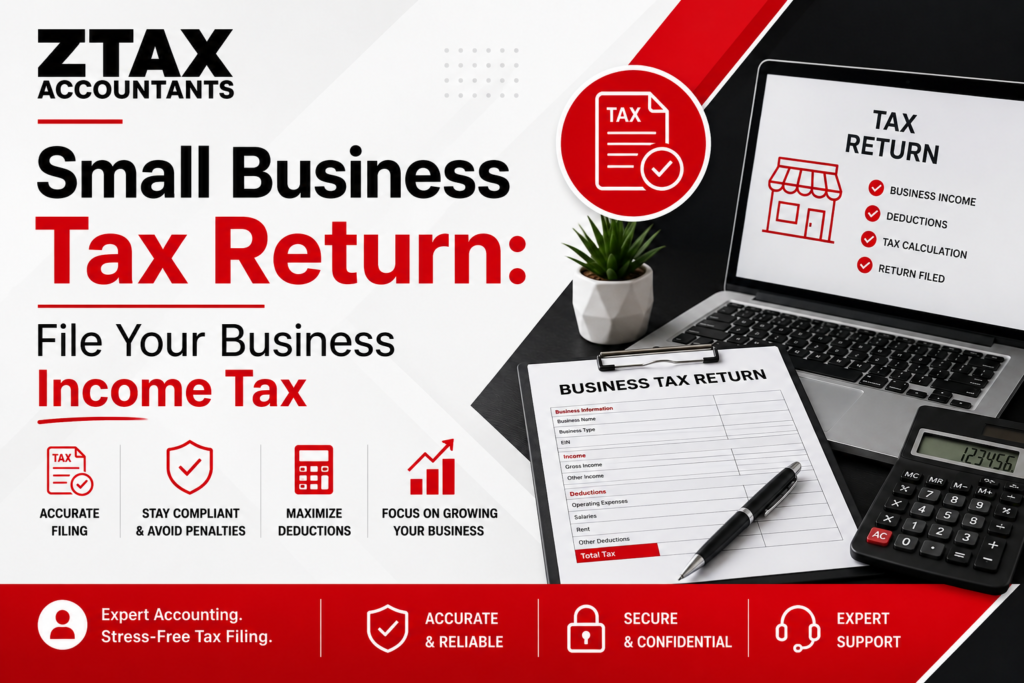
Sole proprietors and single‑member LLCs report business income on Schedule C with your Form 1040 (personal income tax return) due with the 2026 tax return for tax year 2025 (typically April 15), partnerships file Form 1065 by March 15, S corporations file Form 1120‑S by March 15, and C corporations file Form 1120 by April 15; estimated tax payments are due quarterly to cover federal income tax and self‑employment tax liabilities.
This article explains how to file your business tax return and federal income tax return, choose the right form, prepare and file online or with a tax preparer or tax pro, use tax software like TurboTax (including TurboTax Free Edition or TurboTax Expert Full Service Business), track income and expenses, calculate tax due and estimated tax payments, claim deductions to maximize tax savings, handle sales tax and state tax requirements, deal with amended returns and audits, and get tax advice from tax professionals and tax experts to simplify small business tax, small business owners’ tax situations, and individual or business filing across tax years.
Table of Contents
What is a business tax return, and who must file?
Not every business files the same way; who must file a business tax return depends on the legal structure, income level, activities, and employment status. Generally, sole proprietors with net profit must report business income on Schedule C; partnerships, multi-member LLCs treated as partnerships, S corporations, and C corporations must file their respective entity-level returns regardless of profit or loss. Businesses with employees must file payroll returns and related withholding forms. Even dormant or loss-making entities often have filing obligations to maintain compliance. State and local filing requirements may differ from federal rules, so confirm obligations for all jurisdictions where the business operates.
- Sole Proprietors — File Schedule C if net earnings from self-employment are generally $400 or more and may need to pay self-employment tax.
- Partnerships — Must file Form 1065 annually and provide Schedule K-1s to partners.
- S Corporations — Must file Form 1120-S and issue Schedule K-1 to shareholders.
- C Corporations — Must file Form 1120 regardless of profit.
- Single-Member LLCs — Typically report on Schedule C unless electing corporate tax treatment.
- Employment and Payroll — Any business with employees must file payroll tax returns (e.g., Form 941) and report wages on Form W-2.
All businesses that earn income or operate as separate legal entities—such as corporations, partnerships, and certain LLCs—must file a business tax return with the IRS to report income, deductions, and tax liability.
Definition of a business tax return
A business tax return is a comprehensive report of a company’s financial activities for a specific tax year, submitted to the Internal Revenue Service (IRS) and relevant state tax authorities. It details business income, expenses, deductions, and ultimately calculates the business’s tax liability or potential tax refund. Expert preparation and filing of these crucial documents for various entity types focus on ensuring compliance with federal income tax laws and achieving optimal tax savings.
Who qualifies as a business owner?
You qualify as a business owner if you engage in any activity with the intention of making a profit, whether as a sole proprietor, partner in a partnership, or an owner of a corporation. This encompasses a wide range of individuals, from an individual launching a new venture to a small team running an established business, all of whom are responsible for various operational aspects, including their finances and tax filing requirements.
Types of income that require filing
All forms of business income generated through your commercial activities typically require filing. This includes revenue from sales of goods or services, interest income, rental income from business property, and any other earnings derived from your business operations, which must be reported on your federal income tax return. Z Tax Accountants adeptly manages diverse financial needs, from precise tax filing and detailed bookkeeping to strategic business formation and insightful advisory services, ensuring all income is accurately reported.
Which tax forms does my business need?
The specific tax forms your business needs depend entirely on its legal structure, guiding how you report your business income and deductions to the IRS.
Tax forms by business structure
The choice of tax form is dictated by your business’s legal entity, such as a sole proprietorship, partnership, S corporation, or C corporation. Each structure has distinct requirements for reporting business income tax and various business tax deductions, necessitating a specific IRS form to file your return correctly. Understanding which form applies to your particular tax situation is crucial for accurate tax preparation.
Comparison table of business structures and IRS forms
To simplify the process of identifying the correct forms, a detailed comparison table outlining various business structures, their corresponding IRS forms (such as Form 1120, Form 1120-S, and Form 1065), and key filing deadlines can be incredibly helpful. This resource clarifies the path for various small business owners to file their business taxes, ensuring they use the appropriate documentation for their federal tax return.
Understanding Form 1120, Form 1120-S, and Form 1065
For C corporations, Form 1120 is used to report income, gains, losses, deductions, and credits, and to figure the corporation’s income tax liability. S corporations, which are pass-through entities, utilize Form 1120-S to report their income, losses, and dividends, with profits and losses passed through to shareholders’ personal income tax returns (Form 1040). Partnerships, another type of pass-through entity, file Form 1065 to report their income, deductions, gains, and losses, with partners receiving a Schedule K-1 for their share of the business’s income or loss to include on their individual Form 1040. Sole proprietors, on the other hand, report their business income and expenses on Schedule C, attached to their Form 1040.
What are the key deadlines for filing?
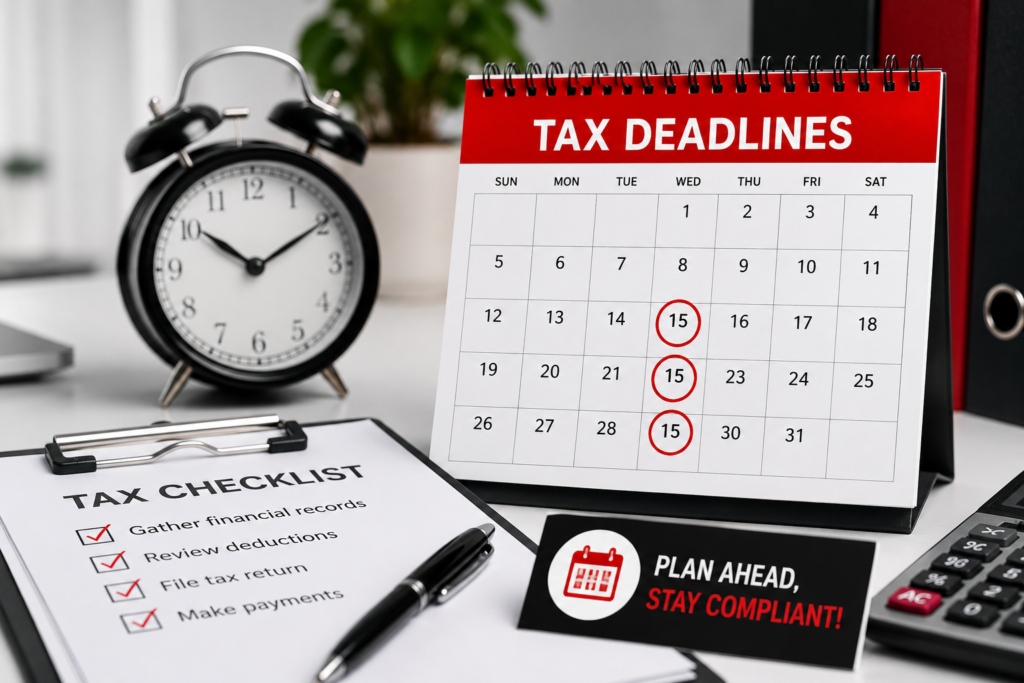
Meeting IRS filing deadlines is paramount for all small business owners to avoid penalties and ensure compliance with federal tax regulations.
IRS filing deadlines overview
The IRS establishes specific deadlines for filing various business tax returns, which can vary based on your business structure and the end of your tax year. These dates are critical to observe for all individual or business entities, ensuring timely submission of your federal income tax return and any associated payments, thus avoiding potential late filing penalties.
Estimated tax payment deadlines
Many small business owners, especially sole proprietors, partners, and S corporation shareholders, are often required to make estimated quarterly taxes throughout the year if they expect to owe at least $1,000 in tax. These estimated tax payments are generally due on April 15, June 15, September 15, and January 15 of the following year, helping manage your overall tax liability.
Important dates for the current tax year
For the current tax year, it is crucial to verify all IRS filing deadlines and payment due dates, as these can occasionally shift. Always refer to IRS.gov for the most up-to-date information regarding your specific business tax return and estimated tax obligations, ensuring you remain compliant and accurately manage your tax preparation.
What deductions and write-offs can I claim?

Claiming all eligible deductions and write-offs is essential for reducing your taxable business income, ultimately lowering your small business tax liability and maximizing your tax savings.
Common business tax deductions
Understanding and utilizing common business tax deductions is a cornerstone of effective tax planning for any small business. These deductions reduce your reported business income, directly impacting your overall tax liability. Common deductible expenses often include rent for business premises, utility payments, office supplies, advertising costs, and business insurance premiums. Furthermore, professional preparation and filing of individual tax returns ensure compliance and maximize eligible deductions and credits, securing every opportunity for tax savings. Keeping meticulous records of all these expenses throughout the tax year is crucial for substantiating your claims if your return is ever questioned by the IRS.
Understanding business income tax write-offs
Business income tax write-offs are essentially the same as deductions, representing expenses incurred in the operation of your business that can be subtracted from your gross income to determine your net taxable income. These write-offs encompass a broad range of operational costs, from employee salaries and benefits to professional development and travel expenses. At Z Tax Accountants, we aim to optimize tax savings for businesses by thoroughly identifying and applying all permissible business tax write-offs, ensuring your business tax return accurately reflects your financial situation and minimizes your federal income tax burden. This strategic approach helps business owners retain more of their hard-earned profits.
Tax experts' tips on maximizing deductions
To truly maximize your deductions, tax experts recommend diligent record-keeping from day one, categorizing every expense. Leverage tax software or a dedicated tax pro who understands the nuances of various business tax deductions, ensuring no opportunity for tax savings is missed. Proactive tax preparation, including reviewing potential deductions quarterly rather than annually, can uncover overlooked write-offs and optimize your overall tax strategy, contributing to a healthy tax refund or reduced tax payments.
How do self-employment and estimated quarterly taxes work?

Understanding self-employment tax and managing estimated quarterly taxes is crucial for many small business owners, ensuring compliance and avoiding penalties on their small business tax return.
Understanding self-employment tax
The self-employment tax is a social security and Medicare tax primarily for individuals who work for themselves, such as sole proprietors or partners. It covers Social Security and Medicare taxes, which are typically withheld from employee paychecks. For business owners, this tax is calculated on your net earnings from self-employment and is reported on Schedule SE (Form 1040), Self-Employment Tax. Payroll tax services, including calculation, filing, and compliance, and managing employee tax obligations, help ensure you correctly account for these vital contributions and accurately file your return.
When and how to pay estimated quarterly taxes
If you expect to owe at least $1,000 in tax for the year, you are generally required to pay estimated quarterly taxes, which include both your income tax and self-employment tax. These payments are due on April 15, June 15, September 15, and January 15 of the following year, ensuring your tax liability is met throughout the tax year. You can pay these amounts through IRS Direct Pay, the Electronic Federal Tax Payment System (EFTPS), or by mail with Form 1040-ES vouchers. Payroll tax services ensure timely and accurate submissions, helping you avoid penalties for underpayment.
Common mistakes with self-employment taxes
A common mistake with self-employment taxes is underestimating income, leading to insufficient estimated tax payments and potential penalties from the IRS. Another frequent error is failing to deduct the employer-equivalent portion of self-employment tax on Form 1040, which can increase your overall federal income tax liability. Many small business owners also neglect to set aside funds regularly for these taxes, creating a financial scramble when payments are due. Accurate tax preparation and diligent tracking of business income and expenses are key to avoiding these pitfalls.
What is the step-by-step process to file a business tax return?
Filing a small business tax return involves a structured step-by-step process, from gathering financial records to submitting the appropriate forms to the IRS or state.
Step-by-step filing guide
The process of filing your small business tax return begins with meticulously gathering all financial records, including income statements, expense receipts, and payroll records. Next, determine the correct IRS form for your business structure (e.g., Schedule C for sole proprietors, Form 1120-S for S Corps, Form 1065 for partnerships). Calculate your gross income, subtract all eligible business tax deductions and write-offs to determine your taxable business income, and then complete the appropriate forms, ensuring all information is accurate before submission.
How to file online directly to the IRS
To file your business tax return online directly to the IRS, many small business owners utilize tax software like Intuit TurboTax Business or other IRS-approved e-file providers. These platforms guide you through the process, helping you input your financial data and automatically generate the necessary forms, such as your Form 1040 and any accompanying schedules. Electronic filing is generally faster, more accurate due to built-in error checks, and provides immediate confirmation of your submission to the IRS.
What to do after filing your return
After successfully filing your business tax return, it’s crucial to retain copies of all submitted forms and supporting documentation for at least three years, in case of a tax audit. If you are due a tax refund, monitor its status through the IRS “Where’s My Refund?” tool. For those with a tax liability, ensure your tax payments are made by the deadline. Finally, review your financial performance from the tax year just filed to identify areas for improvement in future tax planning and business operations.
What common mistakes should I avoid?

Avoiding common mistakes during tax filing is paramount for small business owners to ensure compliance, prevent penalties, and protect their financial well-being.
Frequent filing errors
Frequent filing errors on a business tax return often include incorrect Social Security Numbers or Employer Identification Numbers (EINs), mathematical errors, and using outdated tax forms. Many small business owners also miss IRS filing deadlines, leading to penalties and interest. Inaccurate reporting of business income or claiming ineligible business tax deductions are other pitfalls that can trigger scrutiny from the IRS or state tax authorities. Thorough tax preparation, potentially with the help of a tax pro, can significantly mitigate these risks and ensure a compliant federal tax return.
Misunderstanding deductions
A significant mistake for many small business owners, especially a startup founder, is misunderstanding which expenses qualify as legitimate business tax deductions and write-offs. This can lead to either overstating deductions and risking an audit, or understating them and paying more federal income tax than legally required. A startup founder or small business owner may struggle with accurate bookkeeping, making it difficult to properly categorize expenses. Consulting with tax experts or using reliable tax software can help clarify these complex tax situations and optimize your tax savings.
Not keeping proper records
Failing to maintain proper financial records is one of the most detrimental mistakes any small business owner can make. Without detailed and organized records of all business income and expenses, it becomes incredibly difficult to accurately complete your business tax return, justify claimed deductions during an audit, or manage your cash flow effectively. Bookkeeping services streamline financial records and ensure accuracy, providing a clear financial picture and the necessary documentation for your tax preparation, thereby preventing costly errors and penalties from the IRS.
When should I hire a professional tax service?

Hiring a professional tax service ensures accuracy and optimizes your small business tax return, providing peace of mind and strategic financial guidance for your business.
Signs you need tax services
A small business owner, especially a startup founder, often struggles with accurate bookkeeping and understanding complex tax situations, needing affordable and reliable financial guidance. They frequently worry about making financial mistakes that could impact their business’s future tax liability. An established enterprise executive seeks optimization, strategic tax planning, and robust financial advisory for expansion. An individual tax filer may lack deep knowledge of tax codes and eligible deductions, prioritizing accuracy, maximizing tax refunds, and minimizing stress during tax season, striving to avoid errors that could lead to IRS notices or a tax audit.
Benefits of working with tax experts
Working with tax experts like Z Tax Accountants simplifies taxes, streamlines bookkeeping, and provides financial clarity, empowering executives, entrepreneurs, and innovators to make confident financial decisions. Our mission is to simplify complex financial challenges and deliver clarity that drives growth, ensuring clients stay compliant, optimize tax savings, and focus on business expansion by handling all financial aspects. Our team of certified accountants and tax specialists is dedicated to accuracy, compliance, and excellence, offering dependable, transparent, and long-term financial support through secure, cloud-based tools for real-time insights, budget-friendly solutions, and real-time collaboration. This client-centered approach ensures every strategy is built around your business goals and long-term growth, proactively planning to save money and protect your financial data with bank-level security.
Choosing the right tax professional
Choosing the right tax professional involves evaluating their expertise in your specific industry, their understanding of small business tax returns, and their ability to provide comprehensive tax advice and proactive planning. Look for tax experts who offer clear communication, transparent pricing, and a client-centered approach, ensuring they align with your business’s financial goals and can effectively manage your business income tax obligations. A qualified tax pro will not only help you file your return but also identify potential business tax deductions and optimize your overall tax strategy, contributing to significant tax savings.
Yes. Reliable bookkeeping delivers the financial visibility owners need to set budgets, price products or services correctly, evaluate profitability, plan staffing, and forecast cash needs. Small business bookkeeping services can provide regular KPI reports and financial forecasts that inform strategic decisions and support sustainable growth.
Frequently Asked Questions (FAQ)
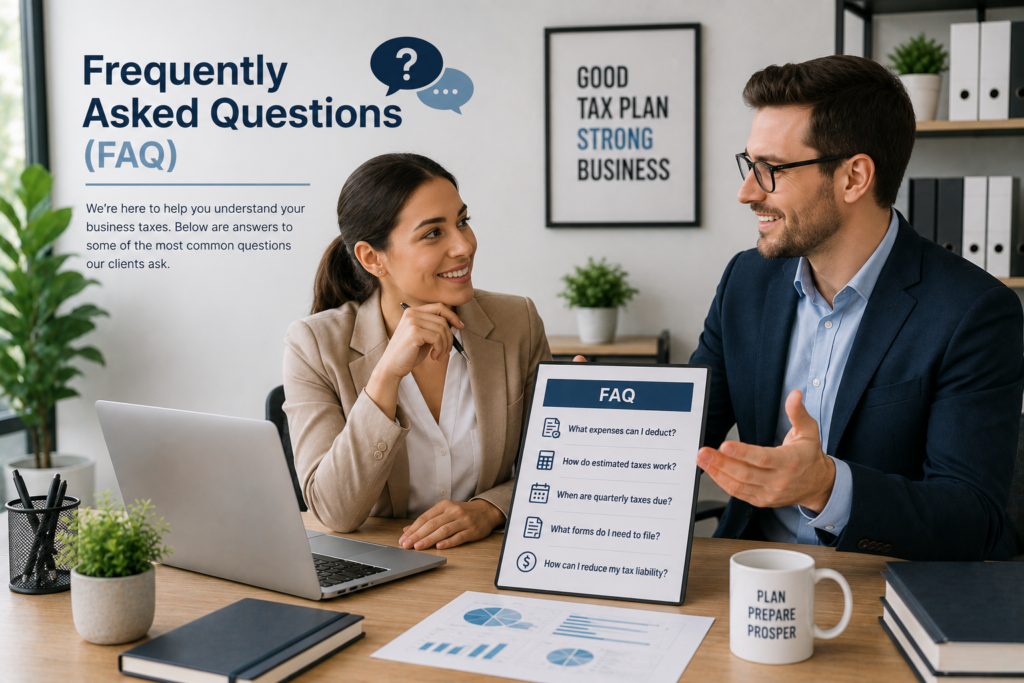
Our frequently asked questions provide succinct answers to common concerns about filing a small business tax return, offering quick insights and expert guidance.
To file a small business tax return, you must gather all financial records, determine your business structure, select the appropriate IRS forms (e.g., Schedule C for sole proprietors, Form 1120-S for S corporations, Form 1065 for partnerships), and accurately report your business income and deductions. Z Tax Accountants offers expert preparation and filing of business tax returns for various entity types, simplifying the process and ensuring compliance with all federal income tax requirements.
Missing the IRS filing deadline for your small business tax return can result in penalties for late filing and late payment, along with accrued interest on any unpaid tax liability. The severity of these penalties often depends on how late you file and the amount of tax you owe. It is always best to file an extension if you cannot submit your return on time, as this extends the time to file but not the time to pay any estimated tax due.
Yes, you can file your business taxes online through various IRS-approved tax software providers or by working with a professional tax pro who offers e-filing services. Filing your business tax return online is often more efficient, reduces the chance of errors through built-in checks, and provides immediate confirmation of your submission. This method is increasingly preferred by many small business owners for its convenience and speed.
For tax purposes, you need to keep meticulous records of all business income, expenses, assets, liabilities, and payroll information. This includes bank statements, receipts, invoices, mileage logs, and any documentation related to business tax deductions. Bookkeeping services ensure accurate financial records are maintained, providing the essential documentation needed to complete your small business tax return, navigate a potential tax audit, and accurately calculate your tax liability.
You report business income on your small business tax return based on your entity structure. Sole proprietors use Schedule C (Form 1040), partnerships file Form 1065, S corporations file Form 1120-S, and C corporations file Form 1120. These forms detail your gross income and allow for the subtraction of eligible business expenses, leading to your net taxable business income. Bookkeeping services provide clear financial insights for businesses, ensuring all income is accurately captured for tax filing.
Forming an S corp vs LLC offers distinct benefits, primarily revolving around tax implications and liability protection. An LLC provides liability protection and flexible taxation as a pass-through entity, while an S corp, also a pass-through, can allow owner-employees to save on self-employment tax by distributing profits as both a salary and a distribution. The optimal choice depends on your specific business income, growth projections, and desired tax savings.
The self-employment tax directly impacts your federal income tax return by covering your Social Security and Medicare contributions if you are self-employed. This tax is calculated on your net earnings from self-employment and is reported on Schedule SE (Form 1040). You can also deduct one-half of your self-employment tax from your gross income, reducing your overall tax liability. Payroll tax services include calculation, filing, and compliance of payroll taxes, ensuring accurate accounting for self-employment tax.
Pass-through entities are business structures, such as sole proprietorships, partnerships, and S corporations, where business income and losses are “passed through” directly to the owners’ personal income tax returns (Form 1040) rather than being taxed at the business level. This avoids double taxation, as the income is only taxed once at the individual level, although owners are still responsible for self-employment tax.
Business tax write-offs, also known as deductions, work by reducing your taxable business income, thereby lowering your overall tax liability. They represent ordinary and necessary expenses incurred in the operation of your business, which can be subtracted from your gross revenue. Z Tax Accountants focuses on tax optimization for businesses by diligently identifying and applying all eligible business tax write-offs, maximizing your tax savings and ensuring an accurate small business tax return.
It is beneficial to hire a CPA (Certified Public Accountant) or EA (Enrolled Agent) when your small business tax situation becomes complex, you are seeking strategic tax advice, or you want to ensure maximum tax savings and compliance. They offer expertise in tax preparation, navigating IRS tax laws, and representing you during a tax audit. Engaging a tax pro is particularly wise if you lack time, expertise, or confidence in managing your federal income tax return.
Conclusion

Effectively managing your small business tax return is crucial for financial health, ensuring compliance, and optimizing your tax position for sustained growth.
Key takeaways on filing a small business tax return
Successfully filing a small business tax return hinges on understanding your business structure, selecting the correct IRS forms (like Form 1040 with Schedule C, Form 1120-S, or Form 1065), and meticulously tracking all business income and eligible business tax deductions. Meeting IRS filing deadlines for both your main return and estimated quarterly taxes is paramount to avoid penalties. Leveraging professional tax services or reliable tax software can streamline this process, maximize your tax savings, and provide valuable tax tips for your specific tax situation, fostering financial clarity and business growth.
Final thoughts and next steps
As a small business owner, mastering your business tax return process is an ongoing journey of learning and adaptation, as tax laws and regulations can change annually. Regularly reviewing your financial practices, staying informed about new business tax deductions, and proactively planning your tax payments are essential next steps. Always prioritize accurate record-keeping and consider how professional tax preparation can consistently benefit your business, ensuring compliance and optimizing your financial outcomes year after tax year.
Call to action for seeking professional advice
Don’t navigate the complexities of your small business tax return alone; seeking professional tax advice can provide invaluable support and strategic insights. Contact Z Tax Accountants today to ensure your business tax return is accurately prepared, compliant with all IRS regulations, and optimized for maximum tax savings. Our expert team is ready to help you simplify your taxes, achieve financial clarity, and confidently grow your business, providing the peace of mind that comes with professional tax services.